
I’m Alex Rivera, a renovation project superintendent, and I’ve spent more than a decade on job sites right here in the Hollywood area. One of the most common - and destructive - issues my team and I encounter is a hidden water leak in a shower. It often starts subtly. Maybe you’ve noticed a faint, musty smell in your bathroom that no amount of cleaning can get rid of. Or perhaps a single tile near the floor feels a little different underfoot, almost like it has a slight give to it. These are the quiet whispers of a much bigger problem: failing shower waterproofing.
Here in South Florida, our hot, humid climate is relentless. Especially in months like September, when the air is heavy with moisture and the late hurricane season is upon us, small failures become big problems fast. A tiny crack in the grout or a gap in the caulk doesn’t get a chance to dry out, allowing water to seep behind your walls day after day. Catching these issues now can save you from a major renovation headache right before the holiday hosting season begins.
Common Signs and Symptoms
Water is persistent. When it gets behind your shower walls, it will always find a way to make its presence known. The key is to know what you’re looking for. From my experience on countless projects, these are the most common red flags that your shower’s waterproofing system has been compromised.
- Cracked, Crumbling, or Missing Grout: Grout is the cement-based filler between your tiles. While it feels hard, it's porous. Over time, it can shrink, crack, and fall out. This is a superhighway for water to get behind your walls. If you’re seeing Hollywood FL cracked grout behind tile, you have a breach in your first line of defense.
- Loose or Shifting Tiles: If you can press on a tile and feel it move or hear a slight squishing sound, that’s a bad sign. It means the adhesive holding the tile to the wall has been compromised by moisture, and the tile is essentially floating on a layer of dampness.
- That Hollow Sound: Gently tap on your shower tiles with your knuckle. Do most of them have a solid, dense sound, but a few have a hollow, empty echo? These bathroom tile hollow sound symptoms indicate that the tile has separated from the substrate behind it (a process called delamination), almost certainly due to water intrusion.
- Persistent Musty Odors: If you smell mildew or a damp, earthy odor long after your shower has been used, it’s not your towels. That smell is likely coming from mold and mildew growing in the dark, damp space inside your wall cavity.
- Stains on Adjacent Walls or Ceilings Below: For second-story bathrooms, this is the most dramatic sign. A yellow or brown water stain appearing on the ceiling of the room below your shower is a five-alarm fire in the world of home maintenance. This is one of the classic South Florida shower pan leak signs and means the leak has been active for some time.
- Peeling Paint or Bubbling Drywall: Look at the walls adjacent to your shower. Is the paint peeling, blistering, or bubbling? Is the drywall soft to the touch? This happens when moisture from inside the shower assembly wicks through the studs and into the surrounding wall materials.
- Soft or Spongy Flooring Outside the Shower: If the floor right in front of your shower curb feels soft, spongy, or buckled, your shower pan may have failed. This is another critical sign of a leak at the base of the shower, which can lead to subfloor rot if not addressed immediately.
- Stubborn Mold or Mildew: Do you have black or green spots in your caulk lines or grout corners that you clean away, only for them to return in a week? This indicates that the moisture is coming from behind the tile, providing a constant source for mold growth.
What Causes This Problem
Understanding the symptoms is half the battle; knowing the cause helps you appreciate why a proper repair is so critical. A beautiful tile job is only as good as the shower waterproofing system hidden behind it.
First and foremost, the most common cause I see is improper installation. A modern shower is a complex, multi-layered system. It requires a sloped mortar bed (the shower pan), a waterproof membrane (like a vinyl liner or a liquid-applied product), properly sealed corners, and a drain assembly that clamps the membrane correctly. If any one of these steps was done incorrectly, the system is destined to fail.
Building movement is another factor. All houses settle and shift over time. This movement can create hairline cracks in the rigid grout and tile, allowing water to get in. Homes in our area, including the large, custom-built Mediterranean and Tuscan-style homes from the 1990s and 2000s, may look solid, but even they are not immune to these subtle shifts. The grand, oversized showers popular in that era have more surface area and more seams, meaning more potential points of failure if the original waterproofing wasn't meticulous.
A punctured membrane can also be the culprit. During construction or a later repair, a misplaced screw or nail can create a tiny hole in the waterproofing liner. It won't be visible, but it will allow water to escape with every shower.
Finally, there's simple age and wear. Caulk and grout are not for life. They are maintenance items that break down from cleaning, use, and our constantly humid environment. When they fail, they open the door for water to begin its destructive work.
When to Call a Professional
Some homeowners are eager to try a DIY fix, and sometimes, that’s okay. If you have a tiny gap in a caulk line that’s otherwise in good shape, cleaning it out and applying a fresh bead of 100% silicone caulk is a reasonable maintenance task.
However, you should call an experienced professional immediately if you notice:
- More than one loose or hollow-sounding tile.
- Any stains on ceilings or adjacent walls.
- A soft or spongy floor outside the shower.
- Cracked grout across multiple areas of the shower.
- A persistent musty smell that doesn't go away.
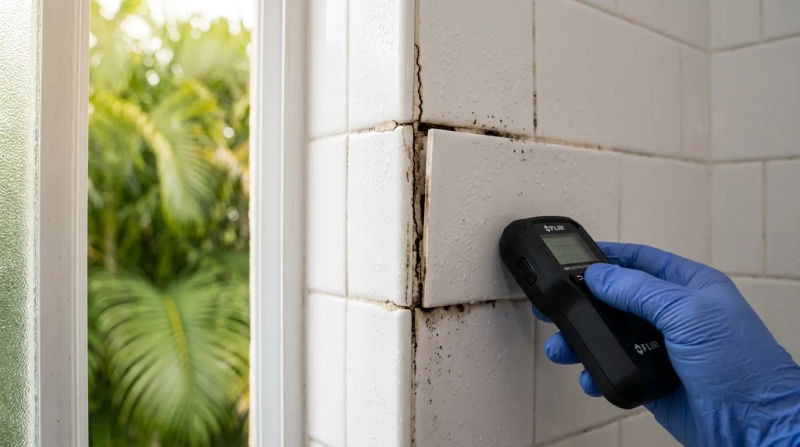
These symptoms mean water has already gotten past the tile and is causing damage to the structure of your home. A simple patch job, like regrouting over the problem, is like putting a bandage on a broken arm. It might cover the visible issue, but it does nothing to fix the underlying failure. A true professional will use tools like a moisture meter to diagnose the extent of the problem and identify the source of the leak, which is often not where the symptoms are most obvious. They can then recommend a real solution that addresses the failed shower waterproofing, not just the cosmetic damage.
Conclusion
Your shower is one of the harshest environments in your home. Ignoring the early warning signs of a leak can lead to costly structural repairs, mold remediation, and a full bathroom teardown. Being vigilant about musty smells, loose tiles, and failing grout is key to protecting your investment.
Especially here in Hollywood, with our year-round humidity, small water issues never stay small for long. Take a few minutes this week to give your shower a thorough inspection. Catching a problem now could be the difference between a targeted repair and a major renovation project that disrupts your life right when you want to be enjoying your home with family and friends.
If you notice any of these signs, don't wait for the problem to get worse. Contact a local, qualified remodeling professional for an inspection to get peace of mind.